

In This Article
- What is a TV unit with mandir?
- What materials are best for this combined unit?
- What are the 3 best styles for a TV unit with mandir?
- What to consider before designing a TV unit with mandir?
- What are the most popular materials and finishes for TV unit with mandir designs in 2026?
- How much will a basic TV unit design with a pooja unit cost?
- Some trending TV unit with mandir designs in 2026
- Now, what are some of the most popular designs of TV units with mandir?
- How can Livspace help you?
67% of Indian apartment dwellers struggle to fit both a TV unit and mandir in their living room. Here’s how to solve it:
A well-designed TV unit with mandir beautifully blends spirituality with modern living while saving precious space.
What you’ll learn:
- Design styles for TV-mandir combos
- 14 real designs with photos & features
- Vastu placement guidelines
- Safety tips for electronics + diyas
Perfect for:
- Beginners planning an integrated TV + mandir setup
- Anyone with space constraints (1BHK, 2BHK apartments)
- Those following Vastu & safety best practices
What is a TV unit with mandir?
A TV unit with mandir is a multifunctional furniture design that combines an entertainment unit and a dedicated pooja space within a single structure. It is commonly used in modern Indian homes where space is limited, allowing both functions to coexist without the need for a separate mandir room.
These designs often use partitions, doors, jaali panels, or changes in materials and finishes to visually distinguish the sacred area from the TV unit, while still keeping the overall look cohesive and well integrated into the living room.
Where should I place the mandir in relation to the TV?
The mandir should ideally be placed away from the direct line of sight of the TV to maintain a sense of calm and respect for the sacred space. Many homeowners prefer positioning the mandir to one side of the TV unit, above a separate cabinet, or behind shutters that can be closed when the TV is in use.
What direction should the mandir face (Vastu)?
According to Vastu guidelines, the mandir is best placed in the north-east (Ishan) corner of the home or living room. The idols should ideally face east or west, allowing the person performing pooja to face east or north.
It is also recommended to avoid placing the mandir directly below a staircase or against a shared bathroom wall, as this helps maintain the sanctity and positive energy of the space.
What materials are best for this combined unit?
The best materials for a TV unit with mandir are those that balance durability with visual appeal. Plywood or engineered wood are commonly used for the main structure due to their strength and long lifespan. Laminates and veneers work well for a clean, modern finish that is easy to maintain.
For the mandir section, natural wood finishes or CNC-cut MDF panels add warmth and detailing, while marble, quartz, or stone-effect surfaces help create a subtle visual distinction. Soft metal accents and warm LED lighting complete the design and enhance both zones.
What are the 3 best styles for a TV unit with mandir?
#1: A cohesive modular TV with pooja unit
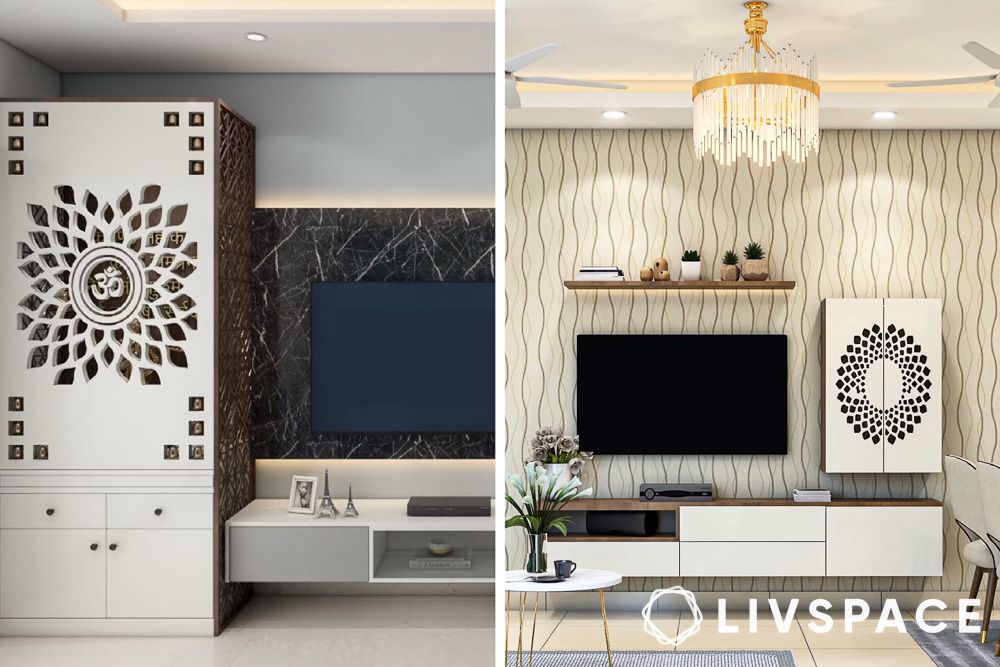
The TV and mandir sections are visually unified, often featuring complementary materials and finishes. This intentional design choice not only fosters a unified aesthetic but also ensures a harmonious flow throughout the room.
#2: The distinct pooja room with TV unit
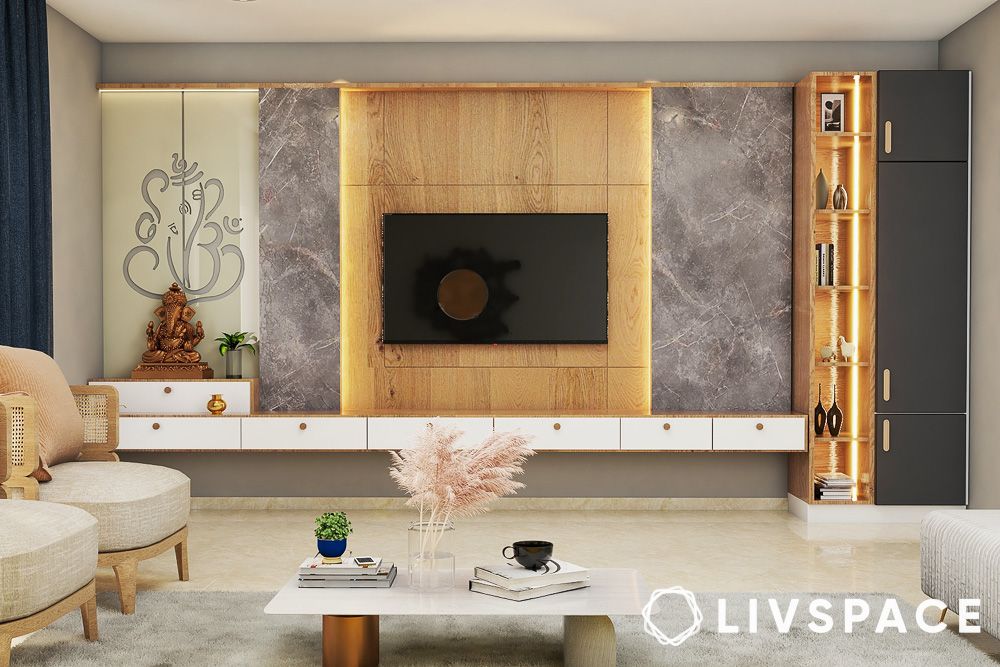
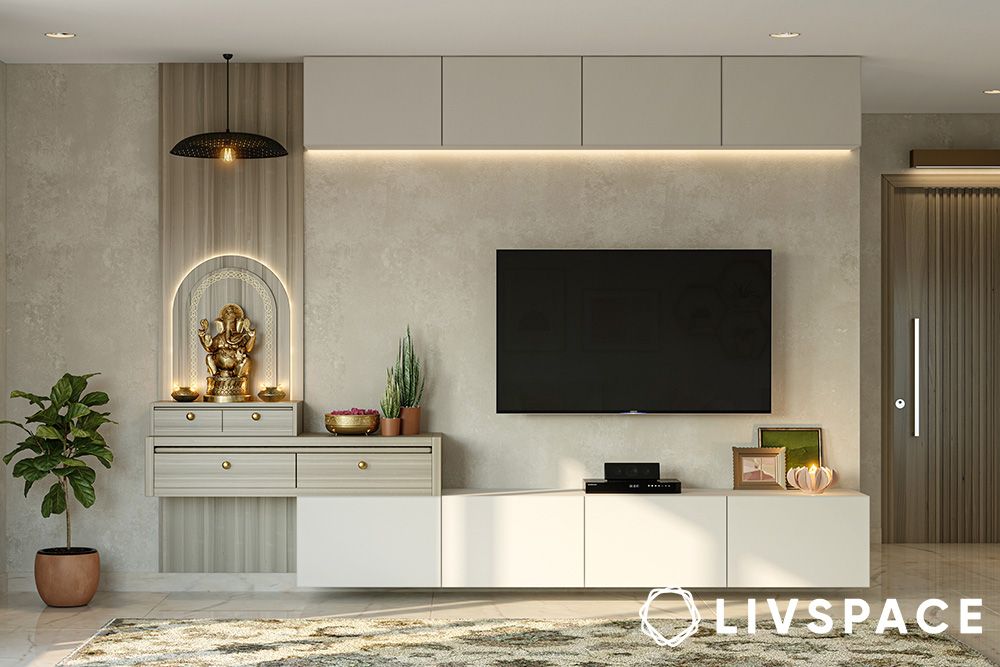
While part of the same furniture piece, these TV units with pooja rooms in the living room sections are distinct, with individual design elements or slight variations in materials. This offers a subtle separation between the entertainment and spiritual areas.
Also Read: 20+ Low-Cost Pooja Unit Designs That Are Perfect for Compact Homes
#3: The floating TV unit with mandir design
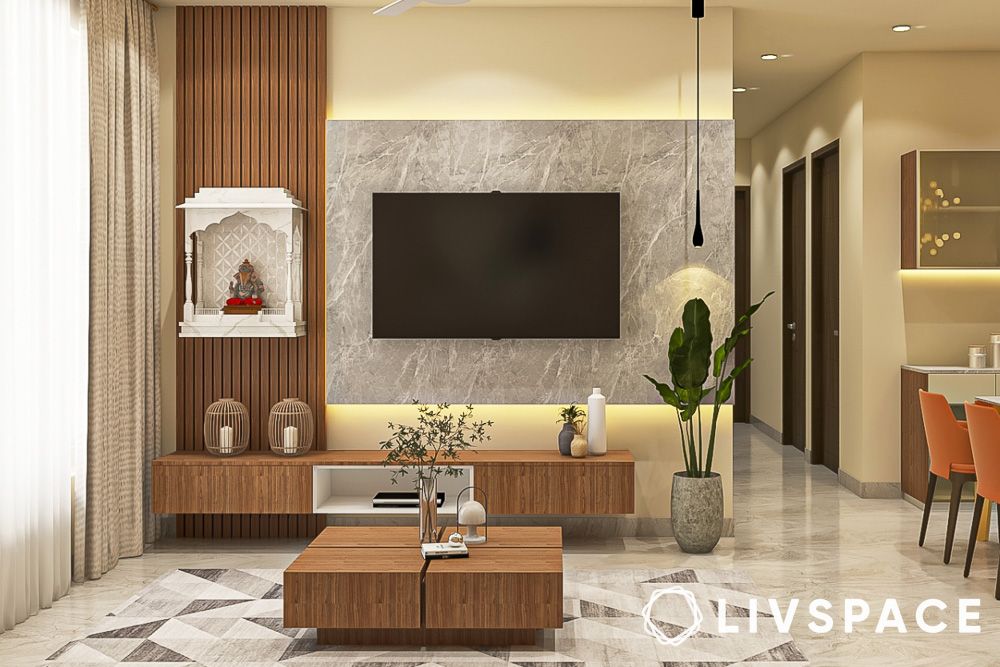
This modern approach features a TV unit design mounted on the wall, with the mandir section mounted on the TV unit, creating a visually lighter and more spacious feel.
What to consider before designing a TV unit with mandir?
Before designing a TV unit with mandir, it’s important to strike the right balance between functionality, aesthetics, and spiritual sensibilities. Start by assessing the available space and layout of your living room, ensuring the mandir placement feels respectful and uncluttered while maintaining a comfortable viewing distance for the TV.
Lighting is another key factor; soft, warm lighting for the mandir and glare-free illumination around the TV help create distinct yet harmonious zones. Adequate storage for pooja essentials, cables, and media accessories keeps the unit organised, while thoughtful design details such as doors, jaali panels, or subtle partitions ensure the sacred space remains visually separate. Lastly, consider ventilation, safety, and electrical planning to ensure the TV unit with mandir is practical, long-lasting, and seamlessly integrated into modern living room interiors.
What are the most popular materials and finishes for TV unit with mandir designs in 2026?
In 2026, TV unit with mandir designs focus on materials and finishes that balance modern style with a sense of tradition. Engineered wood and plywood are widely used for their durability and long-lasting performance, while laminates and acrylic finishes are preferred for the TV section due to their smooth appearance and ease of maintenance.
For the mandir area, natural wood finishes, veneers, and CNC-cut MDF panels remain popular, as they add warmth and allow for detailed craftsmanship.
Marble, quartz, and stone-effect finishes are often used to visually distinguish the mandir from the TV unit, enhancing the spiritual atmosphere. Subtle metal accents in gold, brass, or champagne tones, combined with warm LED lighting, complete the look and make these designs well suited to modern Indian homes.
How much will a basic TV unit design with a pooja unit cost?
The cost of a TV unit with mandir depends on several design, material, and execution factors. The size and layout of the unit play a major role, as larger or full-height designs require more materials and labour. Material selection also impacts pricing, with plywood, solid wood, veneers, marble, and premium laminates costing more than standard MDF options.
The level of design detailing, such as CNC carvings, jaali panels, backlit features, or custom doors, can further increase costs. Finishes and hardware, including soft-close hinges, metallic accents, and specialised lighting, add to the overall budget as well.
Finally, customisation, installation complexity, and location-based labour costs influence the final price, making bespoke TV unit with mandir designs more expensive than modular or ready-made options.
The starting price for a TV unit with a mandir made of MDF SF laminate and CNC shutters with Duco and SF laminate is ₹3250/sq. ft.
Some trending TV unit with mandir designs in 2026
#1: A sleek door
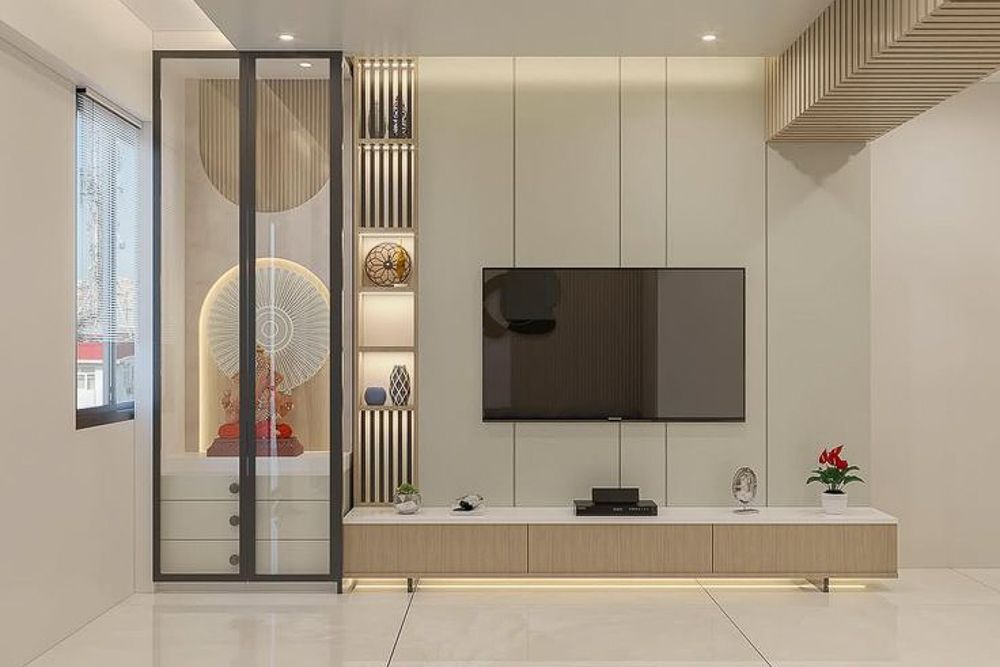
This sleek door design keeps the TV unit with mandir looking clean and modern. The mandir blends seamlessly into the unit when closed, making it ideal for living rooms that favour a minimal, clutter-free look while still maintaining a dedicated pooja space.
Things we 🫶
- The clean, fuss-free door design
- How the mandir stays discreet when not in use
- The sleek look that suits modern interiors
#2: Design in gold
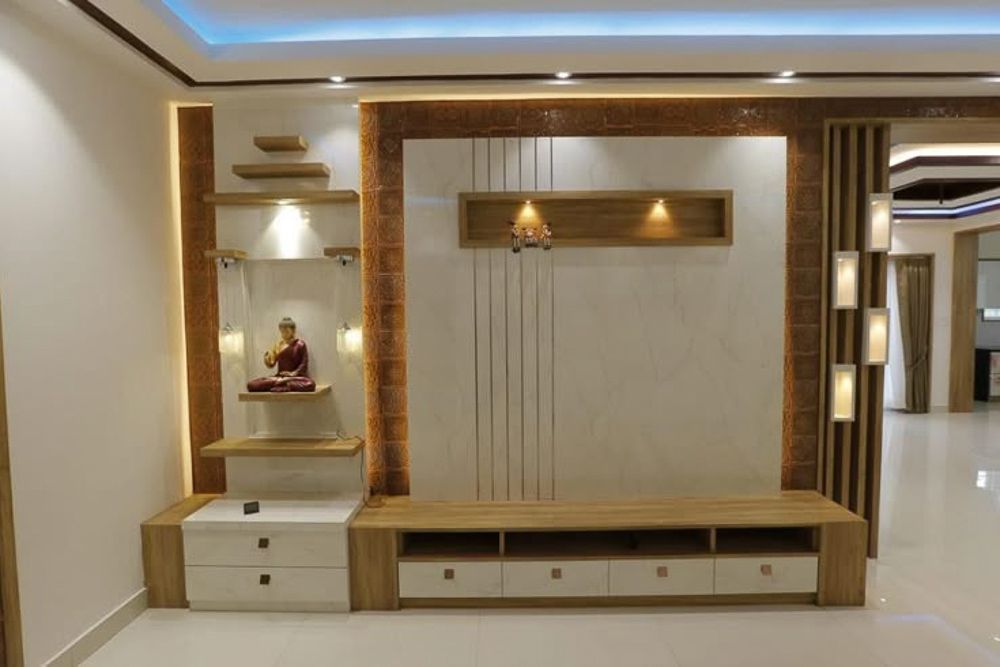
Gold detailing adds a subtle touch of elegance to this TV unit with mandir, helping the pooja space stand out without overpowering the TV area. Used in moderation, the gold finish brings warmth and a festive feel to the overall design.
Things we 🫶
- The understated gold accents
- The balance between luxury and simplicity
- How the mandir naturally becomes a focal point
#3: Wood carvings
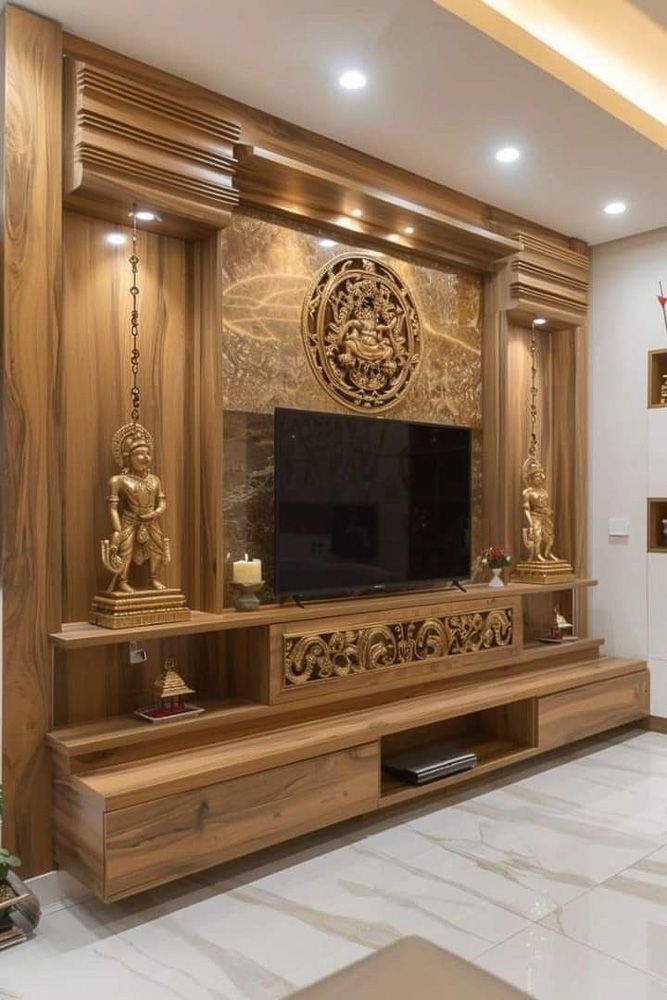
Wood carvings bring depth and traditional charm to this TV unit with mandir. The intricate detailing highlights the pooja space and adds character, making it a great choice for homes that appreciate craftsmanship within a modern layout.
Things we 🫶
- The detailed carved panels
- The warmth of natural wood
- The blend of traditional and contemporary design
Now, what are some of the most popular designs of TV units with mandir?
The one thing you need to remember before choosing a TV unit with a mandir is to choose a unit with enough storage space for your TV components, pooja essentials, and other belongings. It should also not overwhelm the overall feel of the room. Consider using task lighting to highlight your pooja unit and ambient lighting to create a relaxing mood.
#1: The magic of OM
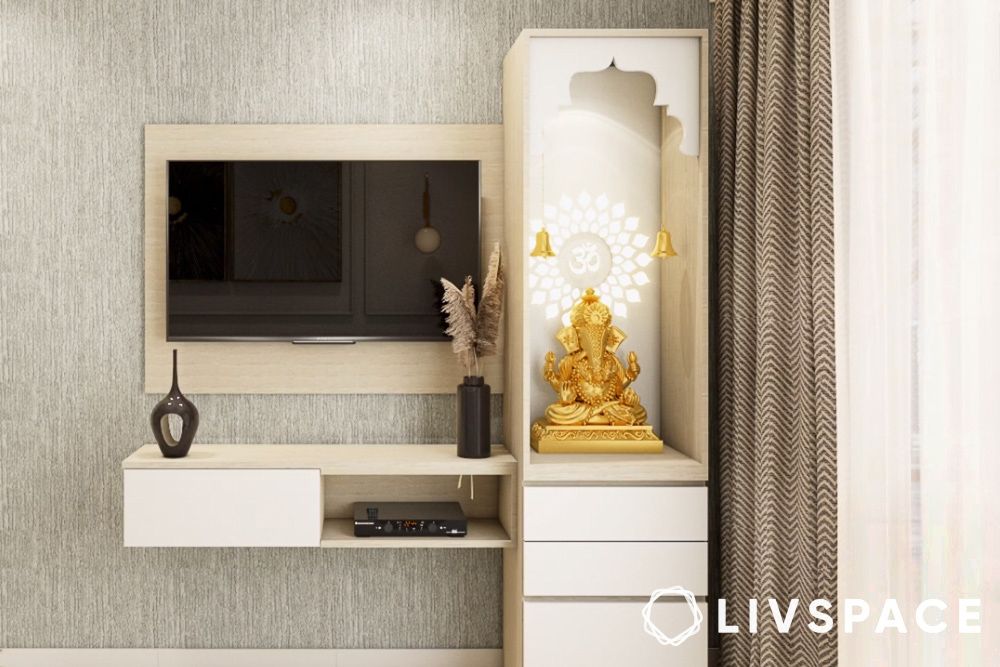
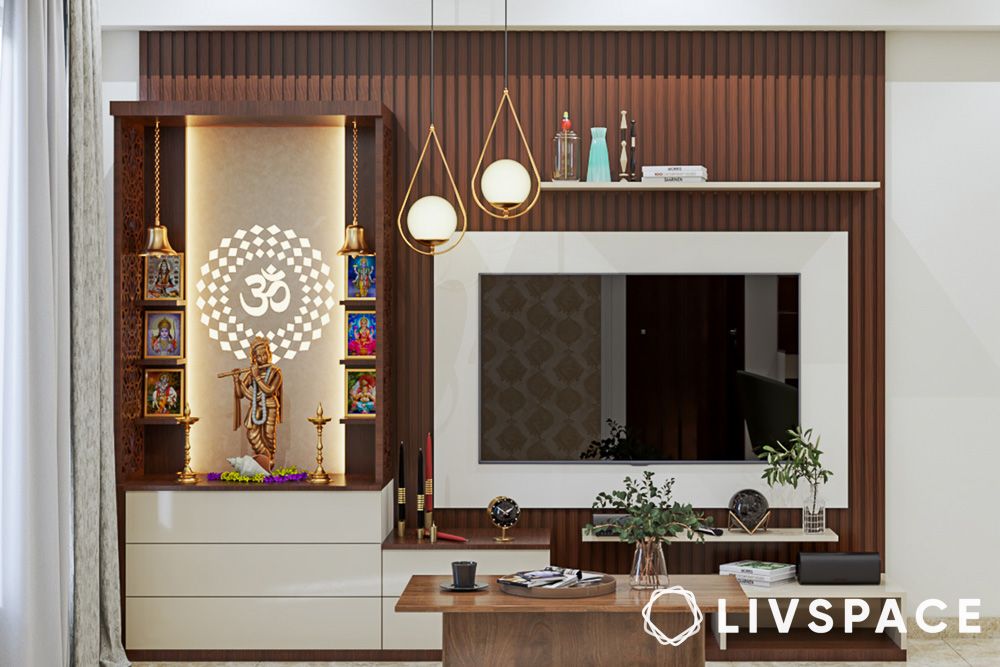
The inclusion of the “OM” design carved in CNC boards on a pooja unit attached to a TV unit signifies a unique approach to integrating faith and modern design. The “OM” can also be strategically placed on various elements of the pooja unit, such as the back panel, above the prayer area, or even subtly incorporated into the design of the doors.
Things we 🫶
- The tiny hanging bells
- Ceiling pendant lights
- Sleek drawers
- Subtle colour palette
#2: Hanging bells and diyas
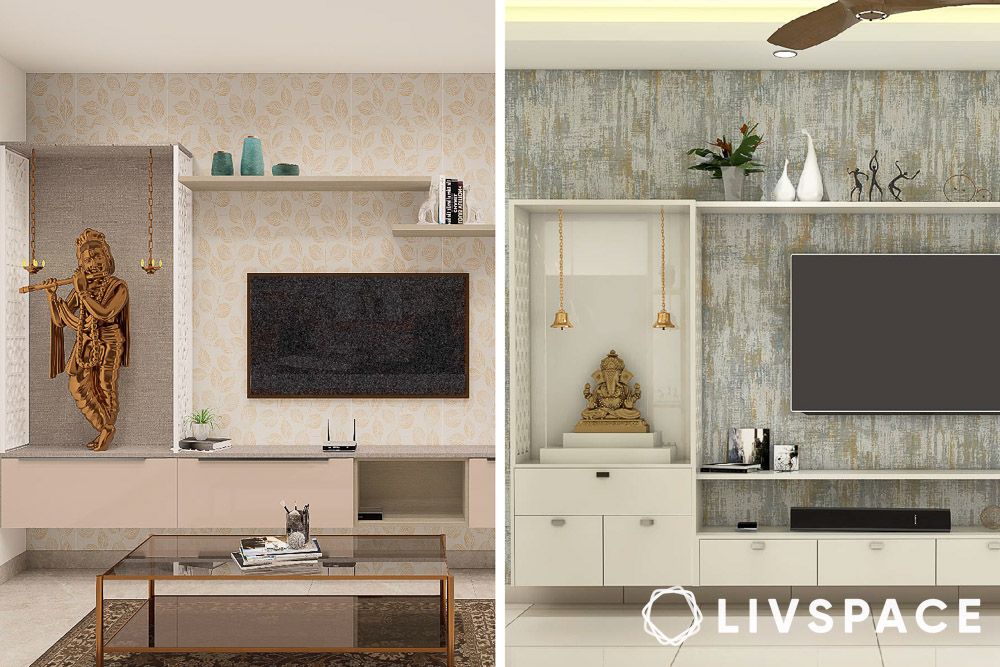
The visual design of a TV unit is often modern and minimalistic, while diyas and bells have a traditional and ornate aesthetic. Combining them directly might create a visually cluttered or mismatched look. Additionally, open flames near electronics may pose a fire hazard. So, you can opt for electric ones and place them quite away from the TV.
Things we 🫶
- The grained and floral wallpapers
- Ample storage options
- Overhead display space
#3: The attached shelf
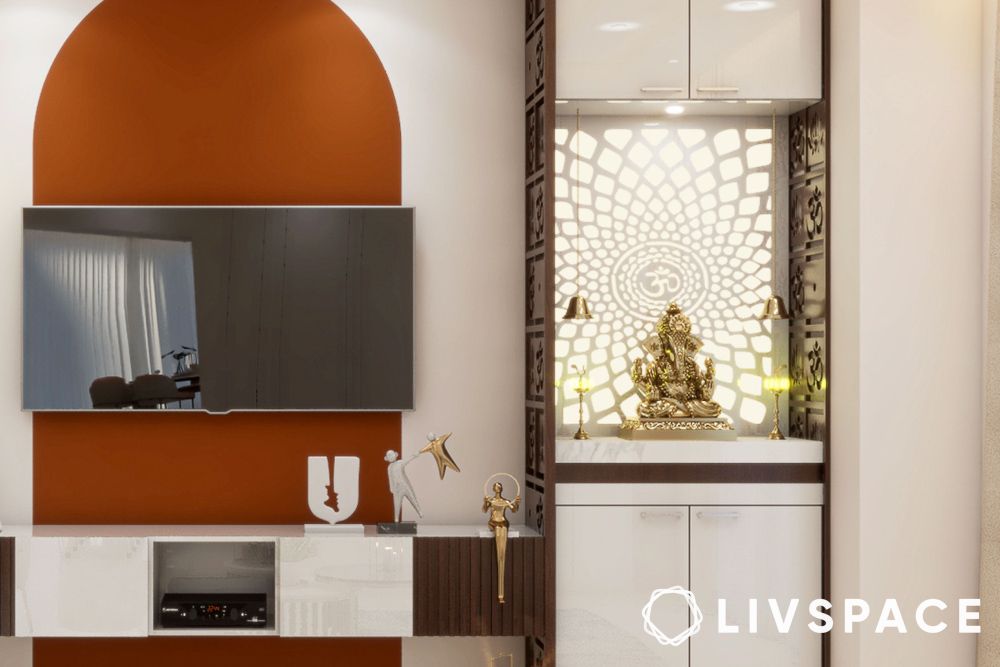
This maintains a clear division between the sacred pooja space and the entertainment area while keeping them visually connected within the same functional unit. Some might feature partitions or shelves to create a clear division, while others might use a more integrated design with subtle separations.
Things we 🫶
- The OM carving on the back and side panels
- The orange arch behind the TV
- Overhead and cabinet storage on the pooja unit
Also Read: 25+ Beautiful Small Pooja Room Designs for Your Home
#4: The Ganesha carving
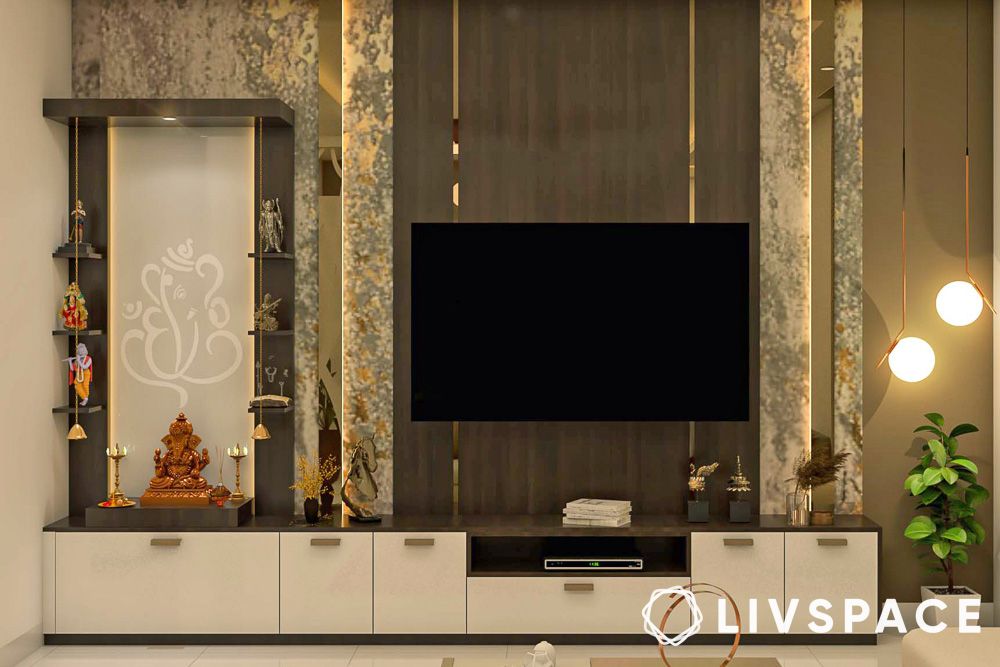
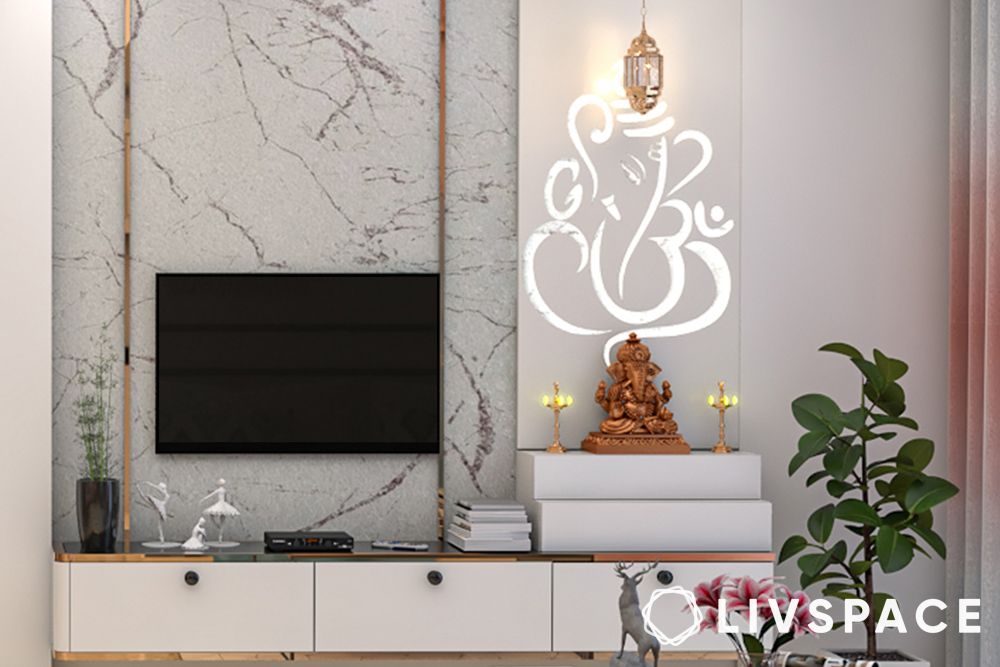
Just like the OM symbol, your most revered God can be carved on the back panel, the top shelf, or even incorporated into the doors of the pooja unit. Ensure the carving is positioned appropriately above the TV unit, maintaining a respectful distance and avoiding any visual clutter. Also, consider adding subtle lighting to accentuate the carving, especially if it’s placed within the pooja unit.
Things we 🫶
- The Ganesha carving
- The backlighting on the pooja unit
- The golden trims on the back panel
- Ceiling pendant lights
#5: The marble panel separation
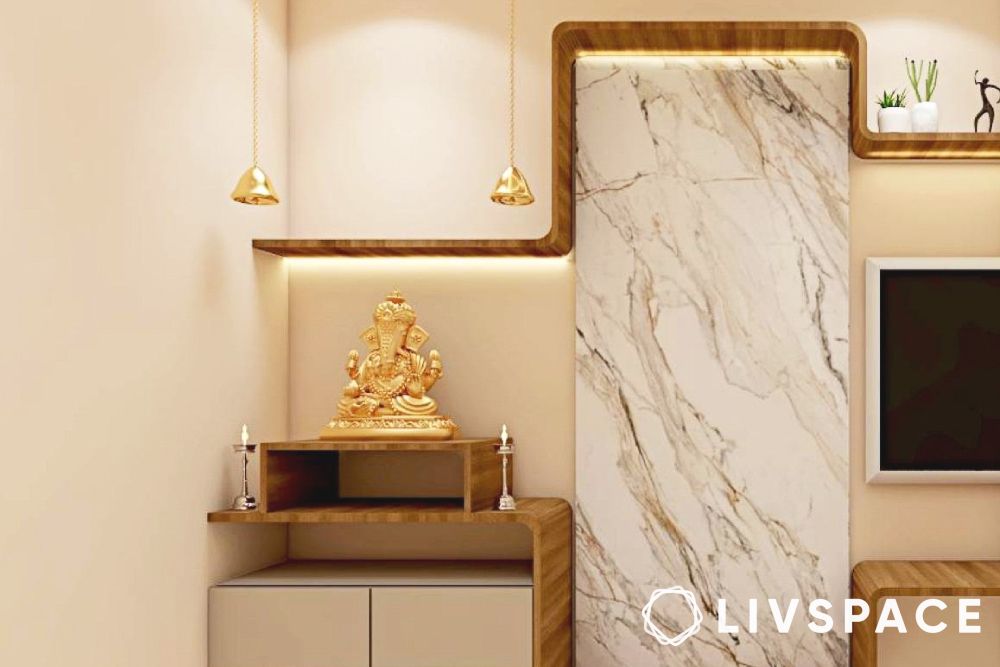
In this unique TV unit with a mandir design, a marble panel that matches the rest of the living room furniture separates the mandir from the TV. You can choose one with light streaks or a bit of colour to make it look more interesting. Add a soft light under the curving panels to make the prayer area stand out. A small idol can be placed on a small, decorated stand inside the prayer area with bells on a pretty hook or holder.
Things we🫶
- The marble panel
- Modern laminated curved panels
- LED strip lighting
- Overhead display space
Also Read: Marble TV Unit Design Marvels: 15 Opulent Ideas for Your Home
#6: The neutral colour palette
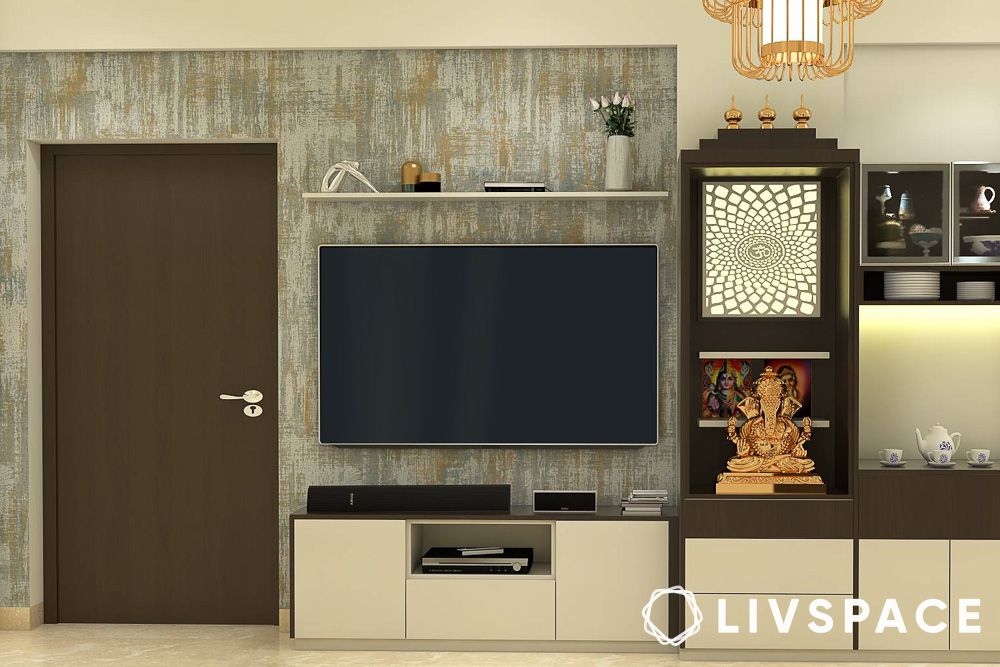
The subtle brown and beige tones gracefully complement the mandir section, ensuring it takes centre stage within the TV unit. With its profound religious significance, the mandir rightfully claims attention. The backlight on the jaali design gives it a divine look!
Things we 🫶
- The chandelier (of course)
- Textured wallpaper
- The jaali OM design with backlighting
- Under cabinet LED strip lighting
- The kalasha on top of the unit
Also Read: 14 Beautiful Indian Style Pooja Room Designs Under ₹1 Lakh to Bring You Prosperity
How can Livspace help you?
- 100,000+ happy homes designed with expertise and trust
- Operational in 100+ cities across India for seamless service
- 3,500+ designers and professionals bringing your dream home to life
- Designed to last, our products come with a lifetime warranty (T&Cs applied)
At Livspace, we understand your home is a reflection of yourself. Our team of expert designers will draw up beautiful renders to help you visualise how your dream home will look.
Looking for tailor-made costs for your home? Hit our Cost Calculator to jump into your financial planning.
Need inspiration beyond your current Pinterest spiral? Check out Design Ideas for professionally curated looks that actually translate to Indian homes and lifestyles.
Want to see what real people think? We have designed over 75,000+ homes. Browse through Livspace reviews from customers and hear what they have to say about us.
Ready to take the next step? Find an interior designer near you, and let’s get started. Click here for directions.
Disclaimer: All contents of the story are specific to the time of publication. Mentions of costs, budget, materials, finishes, and products from the Livspace catalogue can vary with reference to current rates. Talk to our designer for more details on pricing and availability.


